Sunday, April 20, 2014

Craft

Today I started CRAFT(part one). Just like the other sections I have done there will be three parts. So get ready for part one!

To the Cassiterides:

This chapter is called "To the Cassiterides" and it is about tin. The Phoenicians were from Syria and Lebanon. They started their search for tin in Crete and Turkey. They traveled around the world in search for tin and came upon the islands of the Cassiterides. This is where they found most of the tin that they obtained throughout their journey. Tin was also found in Cornwall. It was first discovered there in 2000 B.C.E. in riverbeds and fires. Cornish tin was especially pure. Primo Levi calls tin a "friendly metal" and can be combined with copper to make bronze. It is shiny, strong, and bright yet it can also be soft. Tin soon became the commonplace metal. The Tin man in The Wizard of OZ has tin prostheses after his bewitched axe chops of all his limbs. Tin was named after the ringing sound it made. It rings out "happy imperfections".
Picture Work Cited: Tin man, http://www.elephantjournal.com/2011/09/confessions-of-a-tin-man/, Mid Walsh, Elephant Journal, 8/14/11

Dull Lead's Grey Truth:

The next chapter was called "Dull Lead's Grey Truth" and it is about Lead. In the 1800's Auguste Rodin created The Thinker. It sits on an extreme angle and has been found to contain lead inside it. This is what allows it to defy gravity so well. Lead has been forever associated with death. It does not corrode and preserves it's contents, it has been used in tombs for this very reason. Germany uses lead to predict the future by performing a lead-pouring ceremony on New Year's Eve. But Lead has not only been used for fortunes, it is also used for weapons, architecture, art, and aircraft. However some uses must be put to rest because of hazardous health effects.

File:Auguste Rodin-The Thinker-Legion of Honor-Lincoln Park-San Francisco.jpg
Picture Work Cited: The Thinker, http://commons.wikimedia.org/wiki/File:Auguste_Rodin-The_Thinker-Legion_of_Honor-Lincoln_Park-San_Francisco.jpg, Wikimedia Commons, 6/4/12

Our Perfect Reflection:

This Chapter was called "Our Perfect Reflection", it is about silver. In the book The Great Gatsby silver has much worth during the Jazz Age. It is reflected everywhere during this time. It is even used to describe Daisy as a "Silver Idol" in the eyes of a poor Jay Gatsby. Silver is often associated with feminism and the moon, the very opposite of the sun. It represents purity, innocence, hope, and virtue. "Silver was the brightest and whitest of the elements". Silver was incomplete however because it corrodes over time. It is not readily oxidized and has a tendency to tarnish and blacken. If polished correctly it so clearly reflects light that if you look into it you can see your reflection. 

 Sell Silver New York | We Buy Silver NY
Picture Work Cited: Silver, http://www.nygoldcashers.com/buy-sell/silver/, Generation Jewelers, 2012
Thus ends CRAFT(part one)! Stay tuned for part two.

Friday, April 11, 2014

Fire

Finally, here is the last installment of FIRE.

 Nightglow of Dystopia:

This chapter was called "Nightglow of Dystopia" it is about sodium. In the nineteenth century street lights and houses were lit up using sodium.  Sodium shines at a wavelength of 589 nm. The first sodium lights were installed in Berlin and the Netherlands. Sodium was first discovered in 1801 by Sir Humphry Davy by decomposing Platinum. Sodium is the most abundant alkali metal in the salt of the earth. Sodium was also used to make fireworks. It was dull at first because it could only glow yellow but, fireworks specialists were able to add sodium and other elements to make different colors. Fireworks were very popular back then but, the colors were difficult to create using elements that weren't harmful.
Picture Work Cited: Sodium, http://en.wikipedia.org/wiki/Sodium, Wikipedia, April 7, 2014, 

Cocktails at the Pale Horse:

The next chapter was called "Cocktails at the Pale Horse" and it is about the element Thallium. This element is highly toxic. It was first introduced in 1862 at the International Exhibition held at South Kensington. He obtained a particular element from the Harz Mountains and performed experiments on it hoping to find Tellurium. However, when he examined it's wavelength he found that it was unlike anything that was ever seen before. He called it Thallium. This element was used in Agatha Christie's book "The Pale Horse" to murder many people at an inn. The rise of this book however, lead to the salvation of many real people like a nineteen month old baby girl and seventy photographic workers.
Picture work Cited: Thallium, http://en.wikipedia.org/wiki/Thallium, Wikipedia, April 4, 2014

The Light of the Sun:

This chapter is called "The Light of the Sun" and is about the elements found in space. Helium was first found when astronomers looked up at the sun through the mass spectrometer. Norman Lockyer named it helium after the Greek word Helios for sun. Up until 1895 he was mocked for his work with helium, but then it was proved that he was correct. Occultum was also found in space by Annie Besant and Charles Leadbeater. They were able to sketch what they thought its atoms look like and prove that it was real.
Governments-Should-Ban-Helium-Balloons-Cambridge-Researcher-Says-2
Picture Work  Cited: Helium, Leslie Eastman, http://legalinsurrection.com/2013/09/helium-shortage-shows-big-government-solutions-are-full-of-hot-air/, Legal Insurrection, September 21, 2013
Well that's the end of FIRE(part three)! Next up is section 3: CRAFT.


Sunday, April 6, 2014

Fire

It's time for FIRE (part two)!

"Humanitarian Nonsense":

This chapter is called "Humanitarian Nonsense" and it is about fluorine, bromide, and iodine. Fluorine is the first and most reactive halogen. Fluoridation  began in World War II. It was put into water and used to aid in dental practice. Bromide was used in sedatives. In was used as a anticonvulsant for Queen Victoria which helped curb her epilepsy. Both fluorine and bromide were found to be too dangerous for further regulated use. Iodine however is less dangerous than the other two and was found to be beneficent rather than harmful. It is used as an antiseptic and is characteristically brown liquid in a brown bottle. It was a great accidental discovery in 1805 by Bernard Courtois when he added sulphuric acid to alkaline soda. It was soon found in seawater and other minerals. Each of these chemicals were used at some time for ailments, but only iodine has stuck around.
Bromine
Picture Work Cited: Bromine, http://images-of-elements.com/bromine.php, Creative Commons, January 30, 2010

Slow Fire:

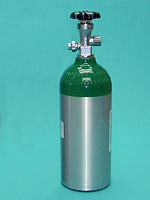
The next chapter is called "Slow Fire" it is about oxygen and water. Water is composed of two hydrogen and an oxygen. In the 18th century neither hydrogen or oxygen was known, water was thought to be one of the four elements. In 1767 Joesph Priestly discovered "fixed air" or Carbon dioxide. It extinguished fires, choked animals, and made plants thrive. In 1777 Lavoisier performed further experiments that created oxygen, which means generator of acid. He then used oxygen and hydrogen to create an explosion that left only pure water behind. Phlogiston described this combustion of air but no one had any real understanding of this. His work placed oxygen at the center of combustion. Even though he made a scientific breakthrough he was still guillotined for his work as a tax collector on May 5, 1794. Oxygen Therapy began to spread in the 19th century. It was used to support life and cure ills. Many skeptics tried to prove this method of quackery, but failed when John Scott Haldane proved  the benefits of oxygen therapy on World War I soldiers that inhaled poisons. Recently however, oxygen has been found to be a destroyer of life. This excess amount of oxygen may have killed Michael Jackson. 
240L Oxygen Tanks
Picture Work Cited: Oxygen Tank, http://www.ozoneservices.com/products/OLO/tank.htm, OzoneLab, April 6, 2014

Our Lady of Radium:


This chapter was called "Our Lady of Radium", it is about radium. Radium is explosively reactive and radioactive. Marie Curie discovered Radium through her work with radiology. In 1902 a tenth of a gram of radium was made. She was awarded a Noble Prize for this discovery. Although radium was harming to the skin it was also found to cure cancer. Everyone adored it for its therapeutic qualities. Other products began to emerge like radium butter, radium beer, radium toothpaste, and radium chocolate. It wasn't clear until the 30's that radium was found to be a danger to health. In New Jersey 15 workers died after suffering anemia and jaw decay from making luminescent watches and using their mouths to put a fine point on the brushes they used. Radium is now only used in radiological clinics. 
map oslo stockholm
Picture Work Cited: Radium, http://www.nobelprize.org/educational/nobelprize_info/curie-edu.html, Mausweisel, Creative Commons, November 2011
This ends FIRE (part two).